Wednesday, July 17, 2013

Hot Doug's hooky

"We all wait ... and with a sense of gratitude that there are still things on this planet worth waiting for."
--Hot Doug's: The Book

I'm not a very patient person, but I will wait for hours for Hot Doug's. I have arrived before they opened, and still waited in line for over an hour. I have battled intense summer heat (last year's 4th of July heat wave springs to mind), winter's bitter cold (the only time I've ever been to Hot Doug's on a Saturday), and the stark depths of my own hunger. I pack a bag -- sunscreen, plenty of water, a snack -- and tuck in for a long wait. The line at Hot Doug's is the perfect spot to catch up with friends, or just enjoy a beautiful summer day.

And then I finally move inside. No longer braving the elements, I make my final decisions so that I arrive at the counter and place my order without hesitation. The line behind me is too long for hesitation. At least two sausages, usually two of the daily specials, though occasionally I yearn for a classic, a brat or Polish sausage.

Hot Doug's is my favorite place for a hooky day. Everything tastes better on a hooky day. Sometimes the wait is more manageable, but I think my longest wait ever was on a Friday hooky day. At least 90 minutes, but surrounded by good friends on a gorgeous day, how could I mind? That day I tried the foie gras dog. So much foie gras. 


About a month ago my officemates and I met up for a Thursday hooky lunch as part of a post-dissertation defense/pre-going away celebration. Barely any line at all! I hardly knew what to do with myself.

Right: Polish sausage, charred with everything - pickle, mustard, tomato, celery salt, onions, neon green relish.

Left: Portobello and Swiss pork sausage, topped with sage mustard, smoked blue cheese, drizzled with honey and shiitake mushrooms sautéed in duck fat.

And then a few weeks ago I saw that Open Books (a cool non-profit bookstore) was hosting a talk and book-signing for Doug's new book about the restaurant. W
ith snacks! I'd met Doug before -- he takes every order every day that Hot Doug's is open -- but never really had the chance to talk to him before. He strikes me as the Louis CK of the hot dog world. It was exciting to meet someone who really seems to love what they do and be satisfied with life. I've always been hesitant to whole-heartedly embark on a career in food. What if I destroy my passion by turning it into my work? I asked Doug for his thoughts on this issue. His advice was to make a plan, stick to it, stay focused. 

So for now my plan is to keep writing, roughly every Wednesday and Sunday, and continue to be thankful that there are still things in this world that are worth waiting for.


Sunday, July 14, 2013

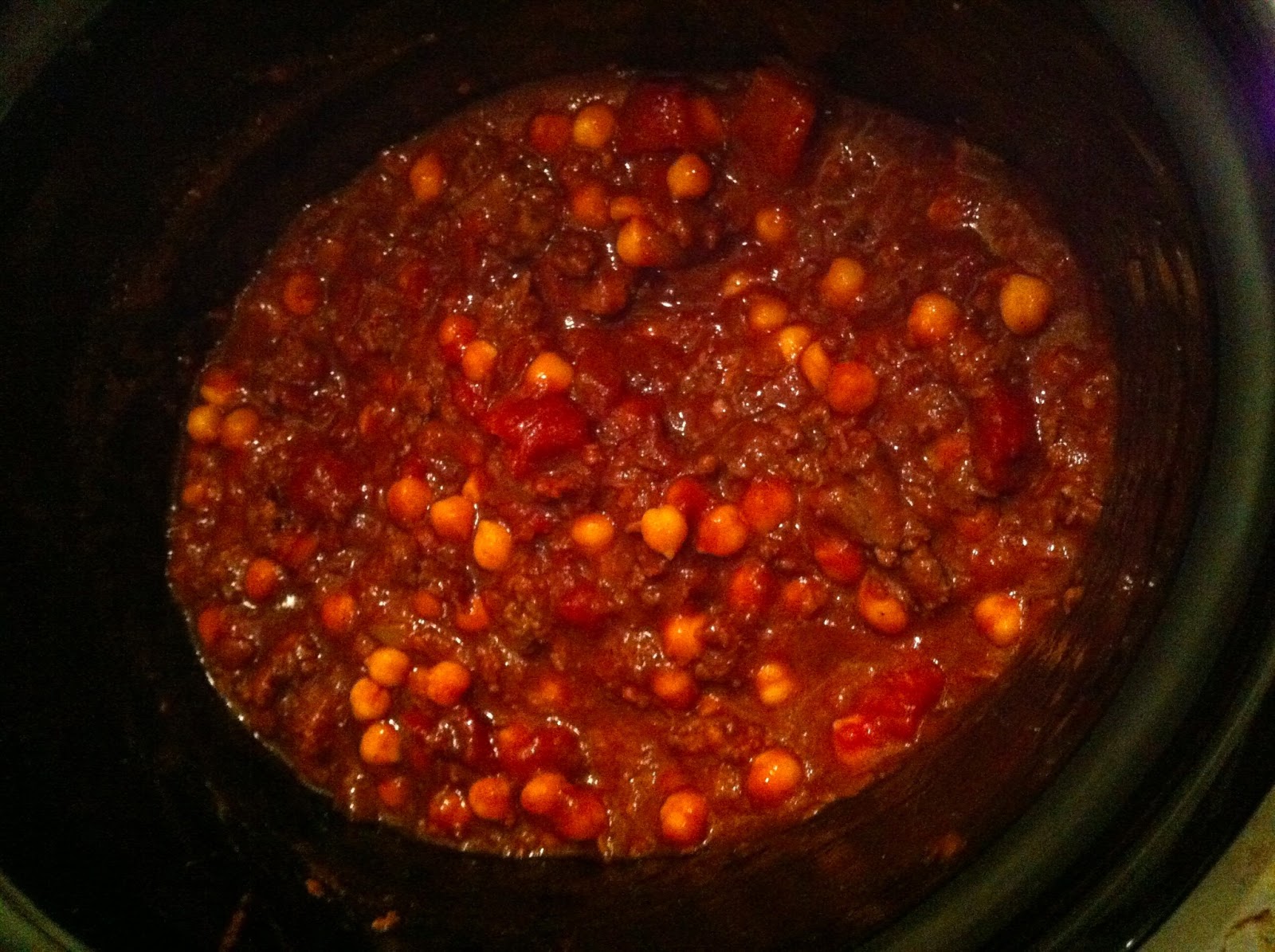
Moroccan goat chili


I love my slow cooker. Just drop in some ingredients in the morning, and by the time I get home from work there is a hot delicious dinner ready. As a single woman who lives alone, coming home to a hot meal is such a luxury. I used ground goat in an adaptation of the Moroccan Beef Chili recipe in my America's Test Kitchen slow cooker cookbook, a resource I use often. The recipe calls for a panade (a mix of white bread and milk that is meant to keep ground meat tender), but I find it hard to justify buying an entire loaf of bread just for one slice, or opening a container of milk for a couple of tablespoons. I left it out this time, and the chili turned out just fine.

To accompany this chili, I decided to try my hand at cauliflower couscous. It's pretty easy. Pulse some cauliflower in a food processor until the cauliflower is chopped to about the size of cous cous. One important lesson I learned during this first pass is that an entire head of cauliflower does not fit in my food processor (and mine is relatively large). Don't force it. You'll just get a bunch of cauliflower mush in the bottom of your work bowl and some big cauliflower chunks.

Moroccan goat chili
Adapted from Slow Cooker Revolution

Ingredients
1 pound ground goat
2 onions, diced
2 tablespoons tomato paste
3 garlic cloves, pressed
2 teaspoons smoked paprika
2 teaspoons cumin
2 teaspoons ground ginger
1 teaspoon cinnamon (the recipe calls for 1/4 teaspoon, but I like cinnamon)
A pinch of cayenne pepper
1 can tomato sauce (15 oz)
1 can whole tomatoes (15 oz), diced
1 can chickpeas (15 oz)
2 tablespoons soy sauce
A large handful of golden raisins
A few sprigs of mint, roughly chopped
Juice and zest from 1/2 a lemon

Method
1. Coat a skillet with olive oil and heat over medium-high heat. When the oil is hot, add the onions, tomato paste, garlic, and spices. Cook until the onions are soft and starting to brown, 8 to 10 minutes.

2. Add the goat to the pan. Sprinkle with salt and pepper and stir to combine, breaking up any large pieces of ground meat. Cook until the meat is no longer pink; this can be a little tricky to see with the paprika, but should be about 3-5 minutes.

3. Stir the tomato sauce into the meat mixture and scrape up any browned bits at the bottom of the pan. Carefully transfer to your slow cooker (this can be a messy step).

4. Stir in the diced tomatoes (it tastes better when you buy whole tomatoes and dice them yourself), chickpeas, and soy sauce. Cover and cook for 6-8 hours on low or 3 to 5 hours on high. I generally stick to the middle of the range (7 hours on low, 4 hours on high), but get to know your slow cooker and adjust accordingly.

5. When you return home, enjoy the delicious smells filling your house. Stir in the raisins, mint, and lemon. Season with salt and pepper to taste. Serve over cous cous (regular or cauliflower-based).

Cauliflower cous cous

Ingredients
1/4 head of cauliflower, roughly chopped
1/4 cup of water or stock
Generous sprinkle of smoked paprika
Juice and zest from 1/2 a lemon
A few sprigs of mint, roughly chopped

Method
1. Add the cauliflower to the work bowl of your food processor. Pulse until it turns into the consistency of cous cous.

2. Coat the bottom of a skillet with olive oil. When the oil is hot, add the cauliflower to your pan. Cook for a few minutes, until it is beginning to brown.

3. Add the water/stock, paprika, and lemon to the pan. Bring to a simmer and cover. Cook until the water is absorbed into the cauliflower and it resembles the consistency of cous cous.

4. Add the mint and season with salt to taste.

Wednesday, July 10, 2013

Next: Vegan

Lily pond, #9. Ingredients hiding in plain sight
My friend Sheila lives in the Bay area, but regularly travels to Chicago to eat. We always go to some of the city's finest eating establishments: brunch at the Publican, pie at Hoosier Mama, a mid-afternoon snack at Avec (like afternoon tea but without the tea), lunch at Little Goat. But the highlight of her most recent visit was dinner at Next during their vegan menu.

About a week before our reservation, I read Kevin Warwick's account of Next's vegan offering. The Wire reference really resonated with me. A nearby table began their meal about halfway through our 3-hour vegan adventure; with every new dish we marveled at the fact that they had so many treats ahead of them, and that they likely would not be finished with their meal until well after midnight. I skimmed past specific menu items so that I did not spoil the surprise and spectacle of the actual meal. I had a wonderful experience at The Hunt in April, and was excited to see how the creative minds at Next would break out of the straight jacket they put themselves in by eliminating so many classic ingredients from their palette for this meal.

Warwick makes an interesting point: Veganism is meant to be simple, not spectacular. I'm certainly not a vegan -- I write a blog about eating meat for goodness sake! -- but I'm gaining more appreciation for that perspective. If you start with good ingredients (meat, cheese, vegetables, whatever) then most of the work is already done for you. Why complicate things? The provided mission statement of the meal reveals an alternative argument for a high-end vegan meal. "What if meat did not exist? Or fish? What would be the focal paint of a dish?" It goes on, "By stripping away many ingredients that we rely on we've come to a new understanding of so many common ones."

Interestingly, this principle is also something I came to appreciate during my paleo challenge this winter. Without bread, pasta, or polenta, what do you use to sop up a sauce or the runny yoke of an egg? How can we repurpose vegetables to take the place of grains? Though meat appears to be the center of the paleo lifestyle, those weeks actually gave me a new appreciation for vegetables. A bed of mashed sweet potatoes, kale, or cauliflower in the style of cous cous can do a lot of the work that grains used to accomplish on my plate.

This meal was far from simple. Each dish was exquisitely intricate. I was filled with anticipation each time a new utensil was brought to our table, or with each reveal that our centerpiece actually contained critical ingredients for an upcoming dish. I was a little concerned that I'd go home feeling unsatisfied, and even had a late-night pizza strategy mapped out in case I needed a slice to fill the gaping hole I anticipated in my stomach. But with nearly 20 courses, this was hardly an issue. I left feeling satiated but not stuffed. This meal was so creative and intricate that I did not miss meat, and my dining partners and I often wondered how they could coax out such rich flavors without using meat stock or butter, or how some elements could be so creamy without dairy.

I wish there had been more mushrooms (an entire mushroom cart trotted out for just one dish!) and fewer sweet dishes. I wish I knew more about the sources of the produce used in the meal, much the way I appreciate notations of meat sources elsewhere. I wish I had been more focused on enjoying the experience and the company than documenting it. I didn't take too many pictures -- I left that task to my friends and their impressive DSLRs -- but instead was the dutiful notetaker of our meal, attempting to capture as many details as I could since I knew that our post-meal record would be comprised of things like "lily pond" and "kale bouquet" but without the specifications necessary to either write about our meal here or talk about it intelligently with friends later. I suppose that is the danger of being a food writer; I run the risk of turning a passion into a task. My notes are transcribed below if you are interested in the play-by-play of this meal. 

But my wishes for the night end there. I was very happy with our choice of non-alcoholic pairings, a series of interesting and complex juices tailored specifically to our meal. At The Hunt I learned that Next is not stingy with their drinks; after 6 portions of wine, armagnac, and who knows what else, the meal started to turn into a meaty blur. Temperance seemed to fit the tenor of the menu. We opted instead for post-dinner cocktails at the Aviary. I ordered their Rob Roy, a scotch-based drink served inside a large clear plastic bag that was filled with lavender-scented air. Our server/cocktail artist cut open the bag with small scissors and held the bag while I stuck my head inside and took a deep breath. I felt ridiculous, but that was sort of the point, right?


Notes on a vegan spectacle 

Drink: Passion fruit, yerba, pineapple

1. Starter and burnt avocado
 --sourdough crackers hidden in tree centerpiece, dusted with matcha powder
--avocado, spread on a rock, topped with crispy kale and japanese 7 spice blend

2. Kale bouquet
--was this a separate dish? there was some kale on top of the avocado

3. Sprouted tempeh
--marinated in soy, topped with basil

4. Frozen baked potato
--in shell (made of potato skin?), cold creamy potato inside

5. Nori dumpling
--spongy, with sesame


6. Earl grey rambutan
--earl grey and rambutan jelly filling (described like a jello shot), inside the outer prickly shell of the rambutan

7. Baby artichoke
--mint pesto, lemon cream, roasted so that outer layers are crispy yet inside is tender

8. Fermented apples and lichen
--homemade apple cider vinegar, for sipping (heavy on cinnamon, sweet and sour, no harsh bite), drawn from a hollowed-out charred log
--fermented apples, apple ice
--roasted and raw cashews, crushed (but not as smooth as cashew butter)
--lichen, rose petals

9. Lily pond
--sorrel, sliced lily bulb salad (seared)
--lychee, white wine glaze
--"pond water" vinaigrette, from the floral centerpiece

and then a tablecloth was brought out. I guess we're going inside now...


10. Strawberry and fennel shortcake
--a crazy plate, a bowl at the base filled with a cider/celery drink (and liquid nitrogen? a cold steam was coming off the top), drank through a metal straw
--on the plate surrounding the bowl, black pepper, fennel, strawberry, preserved lemon, and a black pepper olive oil biscuit
--dairy free, but much like a strawberry shortcake - fennel cream?

Drink: Strawberry, rhubarb, black pepper
--camu camu fruit: I think they said this was in there?

11. Salsifies with oyster and dandelion
--dandelion greens, oyster leaf, salsify (pickled?)
--charred dandelion greens, 3 preparations of salsify, mignonette vinaigrette

12. Swish shard and douchi
--beer-battered and fried swiss chard, on top of a beet vinaigrette
--fried seitan, fermented black bean, fried onion, cilantro, smoked orange (cp. taco filling)

Drink: Tamarind, aloe, pea
--english peas

13. Kombu atoll
--beautiful blue ocean bowl (we all liked it enough to ask who made it)
--braised seaweed, silky tofu
--yuba, ponzu, pumpkin seeds, green shiso, something spicy

14. Mushroom cart
--morels, shitaake, one other type?
--mushroom ragout, farro, sunflower milk foam, fried sunchokes

Drink: Huitlacoche, blueberry, bell pepper
--blueberry, mexican corn truffle, bell pepper froth

Drink: Mango, galangal, kaffir lime
--charred kaffir lime

15. Red onion; inspired by Stupak
--cilantro, quinoa, brussel sprouts (pureed, fried, raw shaved), chard, red onion, red chili
--cp. larb


16. Curry roasted cauliflower
--slow roasted cauliflower
--curry oil, red pepper, smoked paprika
--crunchy garnish in a tube (from new centerpiece)--naan

17. Olive oil jam and bitter chocolate
--flower petals, bite compares to szechuan peppercorns (numbing)
--chocolate cake (crumbly), balsamic, olive oil jam, freeze dried strawberry, black truffle

Drink: Malt, bitter chocolate, black sesame
--chocolate juice, toasted barley, black sesame, basil

18. Hibiscus and pistachio
--hibiscus gel and cake (dense and rich)
--soy and vanilla ice cream with pistachio butter coating
--long pepper ice, fennel fronds
--cp. red velvet cake

19. Steamed crepes
--passion fruit (with a few seeds)
--vanilla with caramelized sugar
--dark chocolate

Post-dinner coffee: iced sparkling Brazilian Americano

Sunday, July 7, 2013

Sausage-crust quiche

One nice thing about sharing an office with two people who like to cook is that I get to check out the exciting things they bring for lunch. My friend and officemate Jocelyn and I both did a paleo diet challenge earlier this year and traded new recipes often to keep each other going in our 6 weeks without grains, dairy, sugar, and lots of yummy things. She shared this recipe for sausage-crust quiche with me when I smelled something good coming from her desk and asked what it was.

The first time I tried this recipe for meat-crust quiche, I used regular Italian sausage from the grocery store. It turned out ok, but not great. Mediocre sausage will make a mediocre crust, so I gave the recipe a second chance when I discovered a package of pork and lamb sausage in my CSA share. This version was much improved, but I think I still prefer a frittata (and it's less work). If you are buying sausage from a meat counter, ask to have it removed from the casing -- one less thing for you to do at home!

I substituted fennel for onion since I had some fennel that I wanted to use up, but I'm not sure I'd do that again. I like fennel in a salad or slaw (raw but marinated in dressing), but sometimes cooked fennel has an odd texture and does not go as well with the rest of the dish as I had imagined.

Sausage-crust quiche
Adapted from PaleOMG

Time: About an hour
Servings: At least 4

Ingredients
1 pound sausage
1 small sweet potato, diced
1 small onion or bulb of fennel, diced
1 clove of garlic, minced or pressed
2 cups spinach
4 eggs
A few sprigs of mint, chopped
Generous sprinkle of smoked paprika

Method
1. Preheat your oven to 375 degrees. 

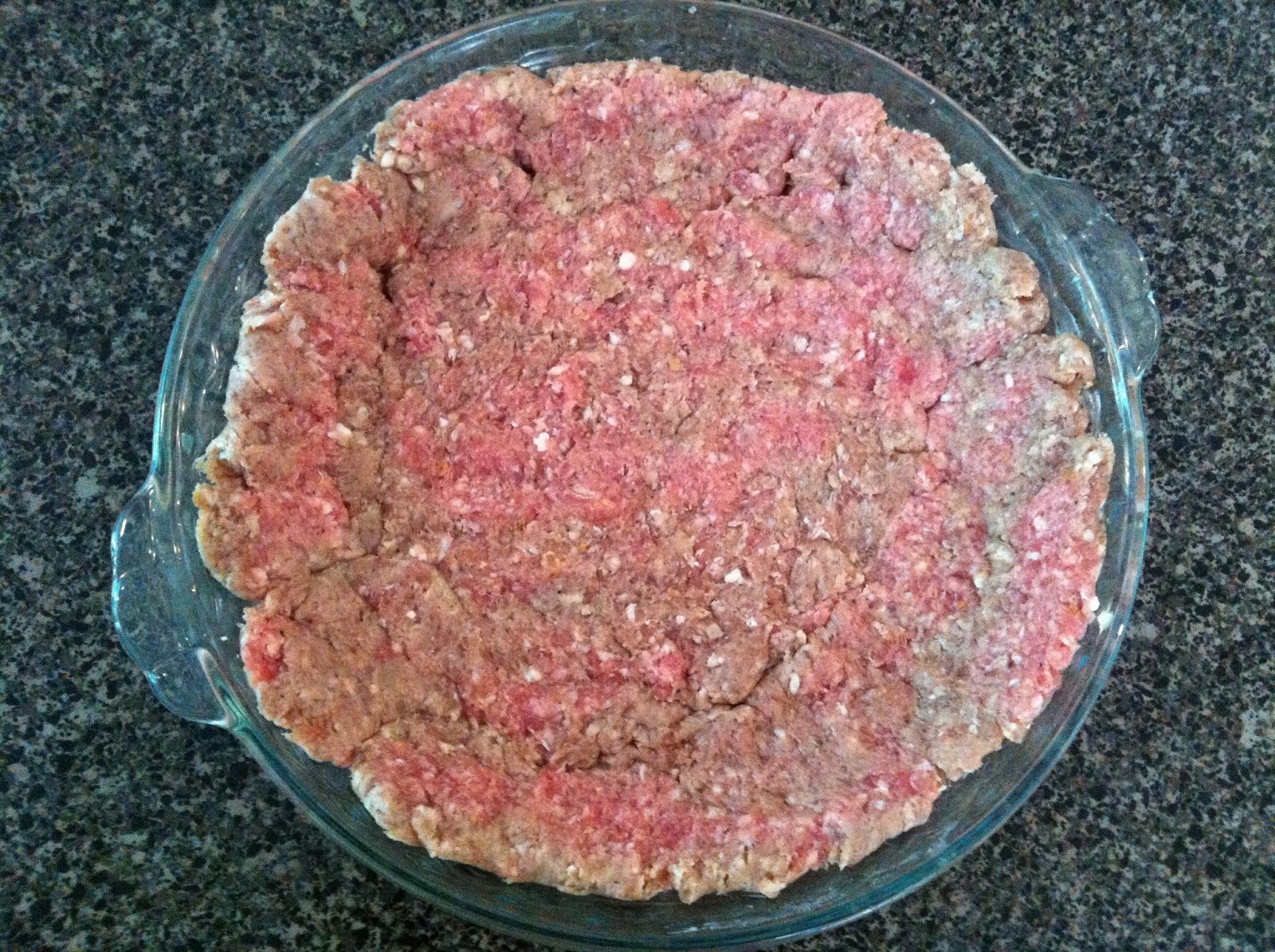
2. Remove the sausage from the casing and press into a pie plate. An 8x8 baking dish would probably work too. Place the plate on top of a baking sheet (so that nothing drips into your oven) and bake for about 20 minutes.

3. Meanwhile, coat the bottom of a skillet with olive oil and heat over medium heat. When the oil is hot, add your sweet potato and onion/fennel. 

3. When the vegetables have had a few minutes to sauté, add the garlic, sprinkle with salt and pepper, and stir to combine. Cover the pan and cook for another 4-5 minutes, until the potatoes have softened. Stir occasionally.

4. Add the spinach and cook until wilted. If you are using regular spinach (not baby spinach), you might want to cover the pan again to help the wilting process along.

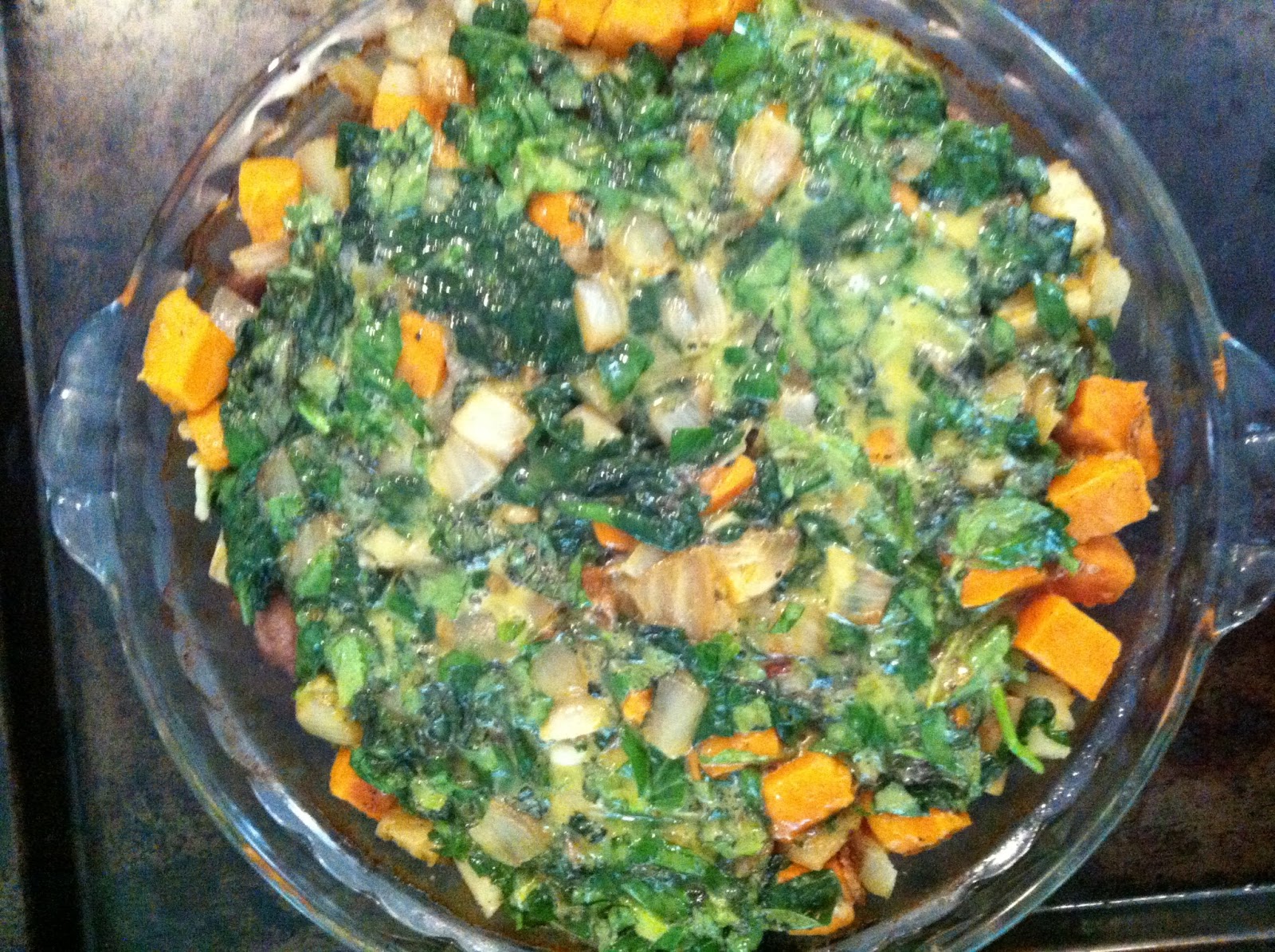
5. When the crust is done cooking, carefully drain out any excess oil (the crust will have retracted from the sides of the plate and might slip around a bit) and pour the vegetables into the crust.

6. Beat the eggs, add the herbs and paprika, and pour into crust with the vegetables. Use a spatula to gently mix the eggs into the vegetables.

7. Return the plate (still on top of a baking sheet) to the oven and bake for about 25 minutes.

8. Let cool, slice, and serve.


Wednesday, July 3, 2013

First birthday BBQ

Whenever I go to a barbecue or potluck with friends, I bring cabbage salad. I got the recipe from my mother, who received it from a family friend. My mom made cabbage salad the first time when I was in high school (I think? Possibly college?) for Easter dinner, undoubtedly served alongside some kind of ham. The salad was a hit, and was soon incorporated into our Thanksgiving menu. I love Thanksgiving and am very protective over that menu, so this was no small feat.

Cabbage salad is a great potluck dish because it doesn't need to be served immediately. Don't make it too far ahead though -- if I am really pressed for time I shred the cabbage and make the dressing the night before but wait to dress it in the morning. The salad follows a simple formula:

Cabbage + dried fruit + fresh fruit + something crunchy + herbs + dressing

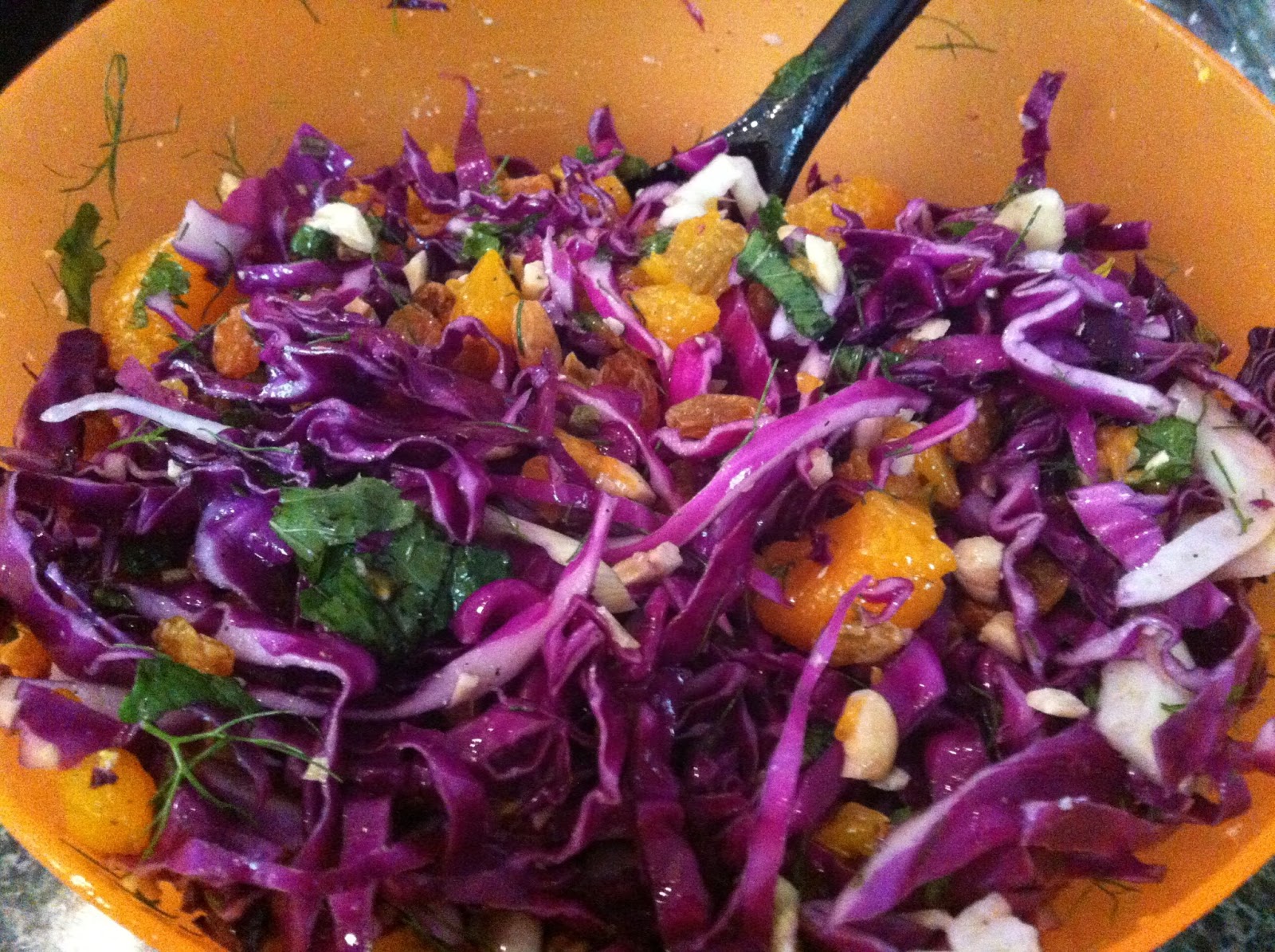
I generally use the same ingredients (red cabbage, golden raisins, mandarin oranges, whatever nuts and herbs I have), but for my friends' housewarming/first birthday bash for their son, I wanted something a bit more special. I added fennel for the first time, and I think I'm going to stick with it. The fennel adds a level of complexity to the flavor of this salad; some said it was my best ever!


Best ever cabbage salad

Time: 15 minutes (depending on your knife skills)
Serves: A crowd

Ingredients
1/2 a red cabbage (or one really small one, but I've never found one that small)
1 bulb fennel
6 large sprigs mint, chopped
2 cans mandarin oranges (drain and reserve some juice for the dressing)
2 generous handfuls golden raisins
3/4 cup cashews, roughly chopped
Apple cider vinegar
Olive oil

Method
1. Shred the cabbage and fennel into thin strips. I find this works best with a serrated knife. Toss in a large bowl.

2. Add the chopped herbs (mint and some of the fennel fronds), nuts, raisins, and oranges to the bowl. Season with salt and pepper.

3. Make the vinaigrette. I use olive oil, apple cider vinegar, some of the juice from the oranges, and some water. Combine until you like the way it tastes; use a strip of cabbage to taste it. I mix my dressing in a can from the mandarin oranges and it should be roughly half full with dressing.

4. Pour the vinaigrette over the cabbage. Don't drown it, but the cabbage should be shiny. Stir gently; your bowl will probably be pretty full.

I also made some ribs. They were not the best ever. I was a bit perplexed since I have successfully made this recipe before, but with a much bigger, fattier slab of ribs and with a different, slightly colder oven. Get to know your oven. Mine runs at least 25 degrees hotter than specified. This batch came out quite crispy, but still tasty and it's such an easy recipe that I'd definitely try it again. Perhaps at a lower temperature, perhaps not for as much time, perhaps with a few peeks inside the tin foil pouch to make sure that the ribs don't burn.

Dry-rubbed ribs
Adapted from A Girl Worth Saving

Time: about 5 minutes to prep, about 3 hours to cook
Servings: 4 as a main course, more if you bring it to a potluck where there is other stuff

Ingredients
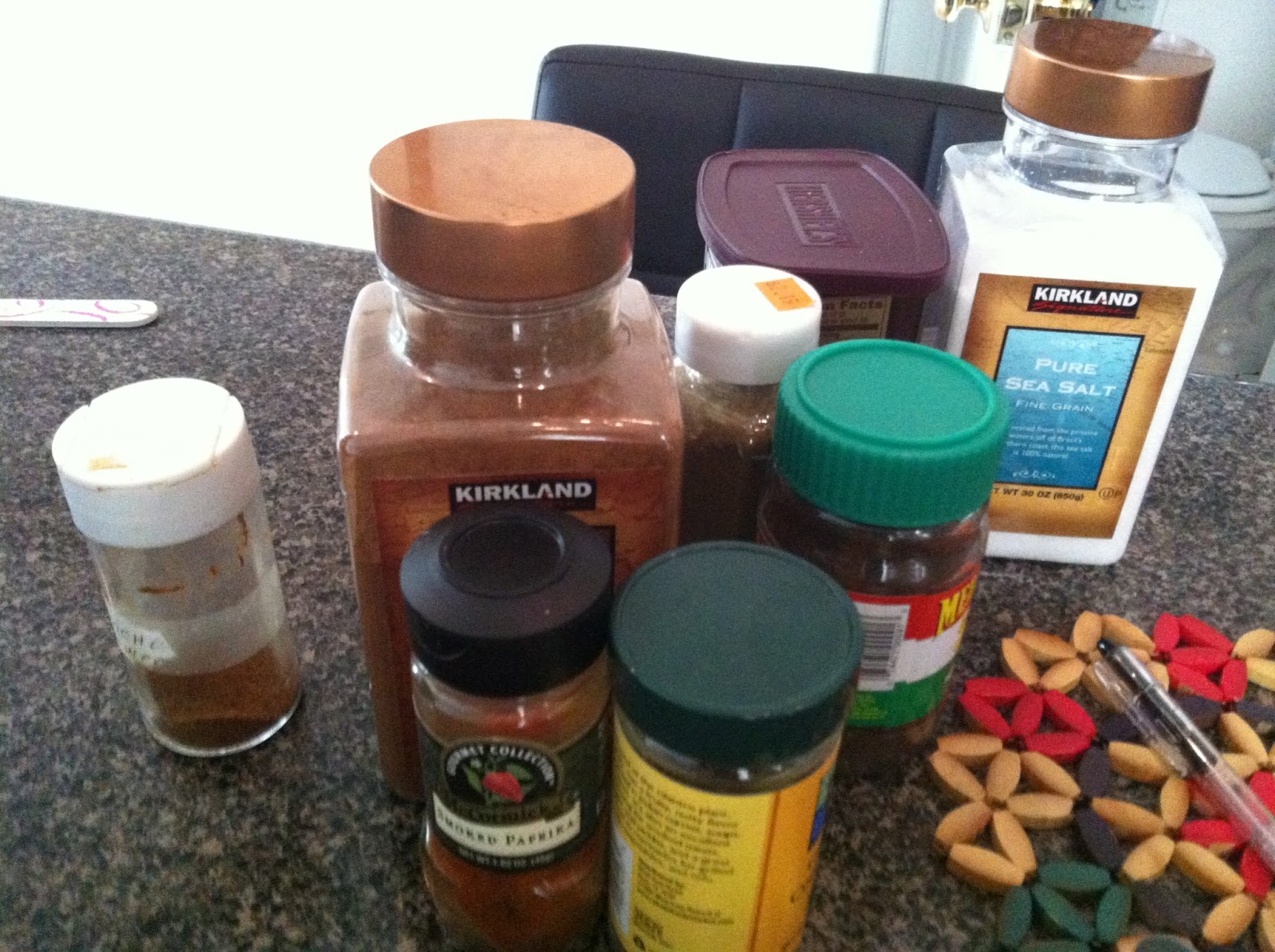
2 tbsp cocoa powder
2 tbsp salt
1 tbsp smoked paprika
1 tbsp cumin
1 tbsp coriander
1 tbsp cinnamon
1/2 tbsp chili powder

1 large rack of pork spare ribs

Method
1. Preheat your oven to 350 degrees (or less if your oven runs hot - I might try 300 next time).

2. Combine the spices in a small bowl and mix well.

3. Put a large piece of tin foil down on top of a rimmed baking sheet and place the ribs on top of the tin foil. Dry the meat with paper towels and rub thoroughly with the spice mixture.

4. Put another large piece of tin foil on top of the ribs and fold to the two pieces together to create a sealed packet. The packet goes in the oven on top of the baking sheet to make sure that nothing drips into your oven.

5. Cook for 3 hours or more. Check periodically to make sure your ribs don't burn to a crisp (after 2 hours and then again every half hour subsequently).